
Have you ever wondered why one fire extinguisher works on a paper fire but can make a cooking oil fire much worse? Understanding the types of fires is more than a safety lesson—it’s knowledge that can prevent injuries, reduce property damage, and help you respond correctly during an emergency.
Different fires burn because of different fuel sources. As a result, each type requires a specific extinguishing method. Using the wrong extinguisher or the wrong technique can allow the fire to spread or even create an explosion.
In this guide, you’ll learn the different types of fires, how they are classified, which extinguishers work best, and how to respond safely in various situations.
Types of Fires and Why They Are Classified
Fire safety organizations classify fires based on the material that is burning. This system helps firefighters, businesses, and homeowners quickly choose the safest method to extinguish a fire.
Each class behaves differently because every fuel source reacts differently to heat, oxygen, and extinguishing agents.
Fire Triangle Basics
Every fire needs three ingredients:
- Heat
- Fuel
- Oxygen
Removing any one of these elements stops combustion.
This explains why some extinguishers cool the fire while others remove oxygen or interrupt the chemical reaction.
Understanding combustion also becomes easier if you’re familiar with a physical change definition, since burning is actually a chemical change rather than a physical one.
How Many Types of Fires Are There?
One of the most common questions is how many types of fires are there.
The answer depends on the fire classification system used in your country.
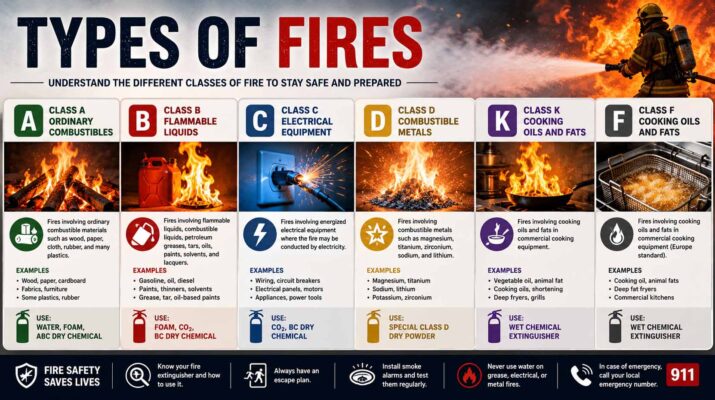
Most countries recognize these primary classes:
| Fire Class | Fuel Source | Common Examples |
|---|---|---|
| Class A | Ordinary combustibles | Wood, paper, cardboard, cloth |
| Class B | Flammable liquids | Gasoline, paint, oil, alcohol |
| Class C | Electrical equipment | Wiring, computers, appliances |
| Class D | Combustible metals | Magnesium, titanium, sodium |
| Class K (or F in some countries) | Cooking oils and fats | Fryers, vegetable oil, animal fats |
Knowing these categories makes choosing the proper extinguisher much easier.
Class A Fires
Class A fires involve everyday solid materials.
Common examples include:
- Wood
- Paper
- Furniture
- Curtains
- Trash
- Cardboard
These are among the most common house fires.
Best Extinguishers
Suitable extinguishers include:
- Water
- Foam
- Multi-purpose dry chemical (ABC)
Water works well because it cools burning materials below their ignition temperature.
Common Causes
Many Class A fires begin because of:
- Candles
- Fireplaces
- Cigarettes
- Electrical faults that ignite furniture
- Unattended campfires
Early detection often prevents small fires from becoming dangerous.
Class B Fires
Class B fires involve flammable liquids.
Examples include:
- Gasoline
- Diesel
- Paint thinner
- Solvents
- Alcohol
- Kerosene
Unlike wood fires, these fuels can spread rapidly across surfaces.
Why Water Can Be Dangerous
Never pour water directly onto burning gasoline or oil.
Water sinks beneath many flammable liquids, causing burning fuel to spread outward.
Instead, firefighters use foam or dry chemical extinguishers that smother the flames.
Class C Fires
Electrical fires occur when energized equipment catches fire.
Typical sources include:
- Power strips
- Circuit breakers
- Computers
- Electric motors
- Home appliances
- Server rooms
The electricity itself isn’t burning. Instead, electricity energizes nearby combustible materials.
Safe Response
Always disconnect the power if it’s safe to do so.
Then use:
- Carbon dioxide (CO₂)
- Dry chemical extinguishers
Never throw water on energized electrical equipment because it conducts electricity and increases shock risk.
Modern industrial facilities often rely on what is instrumentation systems that automatically detect overheating equipment before electrical fires develop.
Class D Fires
Class D fires involve combustible metals.
These include:
- Magnesium
- Sodium
- Lithium
- Titanium
- Potassium
Although rare in homes, they occur in laboratories, manufacturing plants, aerospace industries, and metal workshops.
Special Extinguishing Agents
Standard extinguishers cannot safely control metal fires.
Instead, firefighters use special dry powders specifically designed for burning metals.
Some metals react violently with water.
Class K (or Class F) Fires
These fires involve cooking oils and fats, which can ignite at high temperatures and require the appropriate type of fire extinguisher or fire blanket for safe extinguishment.
You’ll most often see them in:
- Restaurants
- Commercial kitchens
- Home deep fryers
Cooking oil burns at extremely high temperatures.
Throwing water onto burning oil causes explosive splattering.
Instead, wet chemical extinguishers cool the oil while creating a protective foam layer.
If the fire is small, placing a metal lid over the pan may safely remove oxygen.
Types of Fires and Extinguishers
Choosing the correct extinguisher is one of the most important parts of fire safety.
| Fire Type | Recommended Extinguisher | Avoid |
| Class A | Water, Foam, ABC Dry Chemical | None |
| Class B | Foam, CO₂, Dry Chemical | Water |
| Class C | CO₂, ABC Dry Chemical | Water |
| Class D | Special Dry Powder | Water, Foam, CO₂ |
| Class K/F | Wet Chemical | Water |
Many homes contain multi-purpose ABC extinguishers because they cover several common fire classes.
How to Put Out Different Types of Fires
Learning how to put out different types of fires starts with identifying what is burning.
Follow these general steps:
- Stay calm.
- Activate the fire alarm if available.
- Call emergency services.
- Identify the fire class.
- Keep an exit behind you.
- Leave immediately if the fire spreads.
Never attempt to fight a rapidly growing fire.
Personal safety always comes first.
Common Fire Prevention Tips
The easiest fire to extinguish is the one that never starts.
Simple habits greatly reduce fire risks.
At Home
- Test smoke alarms monthly.
- Keep extinguishers accessible.
- Avoid overloaded outlets.
- Store gasoline safely.
- Never leave cooking unattended.
- Blow out candles before leaving a room.
If you enjoy outdoor heating, understanding how does a smokeless fire pit work can help you use these popular fire features more safely while reducing airborne sparks and smoke.
The Science Behind Fire
Fire is a chemical reaction called combustion.
During combustion:
- Fuel reacts with oxygen.
- Heat releases flammable gases.
- A chain reaction continues burning.
Some materials ignite more easily because of their chemical composition.
For example, understanding what are valence electrons helps explain why certain elements react more readily with oxygen than others, although advanced chemistry isn’t necessary for everyday fire safety.
Common Mistakes When Fighting Fires
Even people who know the different fire classes can panic during an emergency. Unfortunately, a few common mistakes can turn a manageable fire into a dangerous situation.
Avoid these errors:
- Using water on grease fires
- Throwing water on electrical equipment that is still energized
- Standing too close while using a fire extinguisher
- Ignoring smoke because the flames appear small
- Trying to fight a fire that has already spread beyond one room
- Blocking your escape route
If you ever feel unsure, evacuate immediately and call the fire department. Property can be replaced, but lives cannot.
Fire Extinguisher Colors and Labels
Fire extinguishers often use color coding and labels to identify their contents. While the exact colors may vary by country, the label always indicates which fire classes the extinguisher is designed to handle.
Here are the most common types:
| Extinguisher Type | Suitable For | Common Uses |
|---|---|---|
| Water | Class A | Homes, offices, schools |
| Foam | Class A and B | Garages, warehouses |
| Dry Chemical (ABC) | Class A, B, C | Homes, businesses |
| Carbon Dioxide (CO₂) | Class B and C | Computer rooms, electrical equipment |
| Wet Chemical | Class K/F | Commercial kitchens |
| Dry Powder (Class D) | Class D | Industrial facilities |
Always read the extinguisher label before using it. Even extinguishers that look similar may be designed for completely different hazards.
Understanding the PASS Method
Most portable fire extinguishers are designed to be used with the PASS method.
Pull
Pull the safety pin to unlock the extinguisher.
Aim
Aim the nozzle at the base of the fire, not the flames above it.
Squeeze
Squeeze the handle slowly and steadily to release the extinguishing agent, maintaining control as you direct it toward the base of the fire.
Sweep
Move the nozzle from side to side until the flames are completely out.
Continue watching the area afterward because some fires can reignite.
Fire Safety at Home
Many residential fires begin with everyday activities. Fortunately, small changes can greatly reduce the risk.
Kitchen Safety
The kitchen remains one of the most common places for home fires.
Practice these habits:
- Stay nearby while cooking.
- Keep towels and paper products away from burners.
- Clean grease buildup regularly.
- Turn pot handles inward.
- Keep children away from hot cooking surfaces.
Electrical Safety
Inspect cords and outlets regularly.
Replace damaged wiring instead of covering it with tape. Avoid plugging too many devices into a single outlet or extension cord.
Heating Equipment
Keep space heaters at least three feet (about one meter) away from curtains, furniture, bedding, and other flammable materials to reduce the risk of fire.
Always turn portable heaters off before leaving the room or going to sleep to help reduce the risk of fire and prevent unattended operation.
Fire Safety in the Workplace
Businesses often face additional fire hazards because of machinery, chemicals, or larger electrical systems.
Employers should:
- Train staff on emergency procedures.
- Perform regular fire drills.
- Inspect extinguishers annually.
- Keep emergency exits clear.
- Install smoke detection systems.
- Store hazardous materials properly.
Manufacturing plants, laboratories, and warehouses may require specialized extinguishers depending on the materials they handle.
Technology That Helps Prevent Fires
Modern technology plays a major role in fire prevention and early detection.
Examples include:
Smart Smoke Detectors
These devices send alerts directly to your smartphone if smoke is detected, even when you’re away from home.
Heat Sensors
Heat detectors monitor temperature changes and can trigger alarms before flames become widespread.
Automatic Sprinkler Systems
Sprinklers activate only when high temperatures reach specific thresholds, helping control fires before firefighters arrive.
Thermal Cameras
Industrial facilities often use thermal imaging to identify overheating equipment before ignition occurs.
These technologies have significantly improved fire safety in homes, offices, hospitals, and manufacturing plants.
Fire Safety Around Special Materials
Some materials require extra caution because they behave differently during combustion.
For example, dry ice is commonly used for cooling and transportation, but it should never be confused with a fire suppressant. If you’re curious about its properties, our guide on how cold is dry ice explains why it behaves so differently from regular ice and why it isn’t suitable for extinguishing most fires.
Likewise, certain industrial chemicals and compressed gases require specialized fire suppression systems rather than standard household extinguishers.
Frequently Asked Questions
What are the different types of fires?
The primary fire classes are:
- Class A – Ordinary combustible materials
- Class B – Flammable liquids
- Class C – Electrical equipment
- Class D – Combustible metals
- Class K (or F) – Cooking oils and fats
Each requires different firefighting methods.
Which fire extinguisher works for most homes?
An ABC dry chemical extinguisher is usually the best choice because it can handle many common household fire hazards, including Class A, B, and C fires.
Can water extinguish every fire?
No.
Water should never be used on grease fires, electrical fires, or burning metals because it can make these situations much more dangerous.
Why are electrical fires classified separately?
Electricity introduces the risk of electric shock. Once power is disconnected, the burning material may become another fire class, depending on the fuel involved.
Are grease fires common?
Yes.
Cooking is one of the leading causes of residential fires, making Class K/F fire safety especially valuable for both homes and commercial kitchens.
Key Takeaways
Understanding the types of fires helps you react quickly and safely when seconds matter. Knowing the difference between Class A, B, C, D, and K/F fires also makes it much easier to choose the correct extinguisher and avoid actions that could make a fire worse.
The best protection starts long before an emergency. Install working smoke alarms, inspect electrical equipment regularly, store flammable materials safely, and keep a suitable fire extinguisher within easy reach. Just as important, take a few minutes to learn how your extinguisher works before you ever need it.
Fire safety is a combination of knowledge, preparation, and good habits. By recognizing different fire hazards and responding appropriately, you can better protect yourself, your family, and your property.