
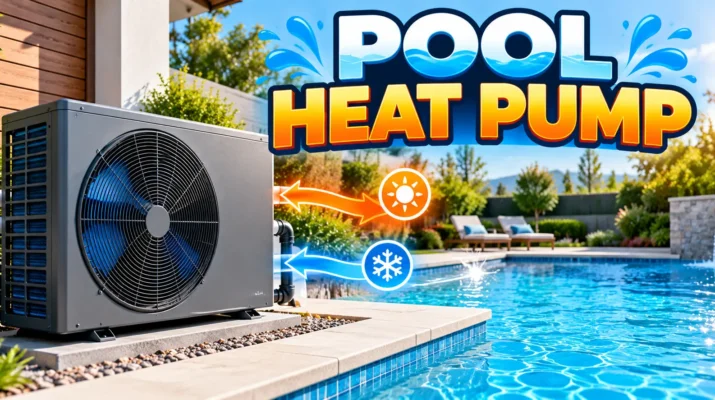
Want to enjoy warmer swimming water without spending too much on electricity? A pool heat pump can be an energy-efficient way to maintain comfortable water temperatures while extending your swimming season.
Unlike traditional electric resistance heaters, these systems don’t generate most of their heat directly. Instead, they extract thermal energy from the surrounding air and transfer it into your pool water.
As a result, they can deliver several units of heating energy for every unit of electricity consumed under suitable conditions.
However, performance depends on outdoor temperature, pool size, installation quality, and how often you use your pool.
Whether you’re installing a new swimming pool or upgrading an existing heating system, understanding this technology can help you make a better purchasing decision.
This guide explains how pool heating systems work, their advantages, limitations, installation requirements, running costs, and practical ways to improve efficiency.
What Is a Pool Heat Pump?
A pool heat pump is an electrically powered heating system that transfers heat from outdoor air into swimming pool water.
Rather than creating heat through electrical resistance, it uses a refrigeration cycle to move existing thermal energy.
Consequently, the system can provide more heating output than the electrical energy it consumes.
A typical unit contains several components:
- Evaporator coil
- Refrigerant
- Compressor
- Heat exchanger
- Expansion device
- Fan
- Temperature controller
- Water flow sensors
Together, these components allow the heater to extract, compress, transfer, and regulate heat.
Interestingly, the operating principle resembles a heat pump water heater, which also transfers heat from surrounding air into water instead of relying entirely on resistance heating.
However, swimming pool models are designed for larger water volumes and different operating conditions.
How Does a Heat Pump Pool Heater Work?
A heat pump pool heater uses a continuous refrigeration cycle to warm circulating pool water.
Although the internal technology sounds complicated, the process is relatively straightforward.
Step 1: The Fan Draws in Outdoor Air
First, a fan pulls surrounding air across the evaporator coil.
Even when the air feels relatively cool, it may still contain usable thermal energy.
However, colder outdoor temperatures generally reduce heating capacity and efficiency.
Step 2: Refrigerant Absorbs Heat
Next, refrigerant flowing through the evaporator absorbs heat from the incoming air.
As a result, the refrigerant evaporates into a low-pressure gas.
Step 3: The Compressor Raises the Temperature
The compressor increases the refrigerant’s pressure and temperature.
Consequently, the hot refrigerant becomes capable of transferring heat into cooler swimming pool water.
Step 4: Heat Transfers Into Pool Water
Pool water circulates through a heat exchanger, where it absorbs heat from the refrigerant.
Meanwhile, the refrigerant cools and condenses back into liquid.
Step 5: The Cycle Repeats
Finally, the refrigerant passes through an expansion device, reducing its pressure and temperature.
The cycle then repeats until the pool reaches its selected temperature.
Because the system transfers heat instead of producing it directly, it can operate efficiently in suitable weather.
Why Choose a Pool Heat Pump?
Pool owners often choose this technology because it offers a practical balance between energy efficiency and consistent temperature control.
However, its advantages depend on climate, pool design, and usage habits.
Lower Electricity Consumption
Heat pumps can deliver several kilowatt-hours of heat for each kilowatt-hour of electricity consumed.
For example, a coefficient of performance (COP) of 5 means the system provides approximately 5 kWh of heating for every 1 kWh of electrical energy used under the stated test conditions.
Nevertheless, actual efficiency changes with air temperature, water temperature, and operating conditions.
The U.S. Department of Energy’s guide to heat pump swimming pool heaters explains how these systems operate and how efficiency ratings help buyers compare equipment.
Consistent Water Temperature
Once the water reaches the desired temperature, the heater can maintain it automatically.
As a result, swimmers can enjoy more predictable conditions during suitable weather.
Longer Swimming Season
In many climates, a heat pump can make swimming comfortable during cooler spring and autumn periods.
However, very cold weather may reduce heating performance significantly.
Automatic Controls
Modern units commonly include digital thermostats, timers, and automatic operating modes.
Some models also offer inverter-driven compressors and remote monitoring.
Consequently, users can manage water temperature without repeatedly adjusting the equipment manually.
Pool Heat Pump vs. Gas and Electric Pool Heaters
Different heating systems suit different swimming habits.
For example, gas heaters can warm water quickly, while heat pumps often provide better efficiency during regular operation.
| Feature | Pool Heat Pump | Gas Pool Heater | Electric Resistance Heater |
|---|---|---|---|
| Heating method | Transfers heat from air | Burns fuel | Converts electricity into heat |
| Energy efficiency | Often high in mild weather | Lower than heat pumps | Approximately 100% at point of use |
| Heating speed | Usually gradual | Typically fast | Depends on power and pool size |
| Weather sensitivity | Significant | Relatively low | Relatively low |
| Best application | Regular temperature maintenance | Occasional rapid heating | Small pools or specialized uses |
| Operating cost | Depends on electricity and climate | Depends on fuel prices | Often high for large pools |
Therefore, a heat pump for pool heating is often attractive when you want to maintain a comfortable temperature over several days.
However, gas heating may suit occasional users who need rapid temperature increases.
How to Choose the Right Pool Heat Pump Size
Choosing the correct heater capacity is essential for reliable performance.
A unit that’s too small may struggle to reach the desired temperature, especially during cooler weather.
Meanwhile, an oversized system may cost more upfront than necessary.
Consider Pool Volume
Start by calculating how much water your swimming pool contains.
For a rectangular pool:
Pool volume (m³) = Length × Width × Average depth
For example, a pool measuring 8 meters long, 4 meters wide, and 1.5 meters deep contains approximately 48 cubic meters of water.
However, pool volume alone doesn’t determine the ideal heater size.
Check Local Weather Conditions
Outdoor air temperature strongly affects heat pump performance.
For example, a unit operating in warm weather may deliver more heat than the same model during a cold evening.
Therefore, compare manufacturer heating capacities at realistic local temperatures rather than relying only on maximum advertised output.
Understand Heating Capacity
Pool heaters are commonly rated in kilowatts (kW) or British thermal units per hour (BTU/h).
If you’re unfamiliar with electrical and heating specifications, understanding What Is a KW can help you compare equipment ratings more confidently.
Remember that heating output and electrical power consumption are different measurements.
A heater rated at 12 kW of heating output may consume considerably less than 12 kW of electrical power.
Account for Heat Loss
Pool covers, wind exposure, nighttime temperatures, and water evaporation all affect heating demand.
In fact, evaporation is often a major source of swimming pool heat loss.
Consequently, an uncovered pool may require substantially more heating energy than a covered one.
Pool Heat Pump Installation: What You Need to Know
Proper pool heat pump installation affects safety, efficiency, and equipment lifespan.
Although some setup tasks appear straightforward, electrical and plumbing connections should follow local regulations and manufacturer instructions.
Choose a Well-Ventilated Location
Most air-source pool heat pumps need unrestricted outdoor airflow.
Therefore, avoid placing the unit inside a small enclosed space or directly against walls that block air circulation.
Also, follow the manufacturer’s minimum clearance requirements.
Connect the Water Circulation System
The heater is typically installed within the pool’s filtration plumbing.
Water flows through the heat exchanger before returning to the swimming pool.
However, the exact plumbing arrangement depends on the system, including whether chlorination or chemical treatment equipment is installed.
Check Electrical Requirements
A qualified electrician should confirm the correct supply voltage, circuit protection, grounding, and any required residual-current protection.
Because these systems combine electricity and water, electrical safety deserves particular attention.
Verify Water Flow
Adequate circulation is necessary for effective heat transfer.
If water flow is too low, the heater may display an error or stop operating.
For this reason, understanding different types of pumps can also help pool owners recognize how circulation equipment supports filtration and heating.
How Much Does a Pool Heat Pump Cost to Run?
Operating cost depends on heater efficiency, electricity prices, outdoor conditions, and pool heat loss.
Fortunately, you can estimate electricity expenses using a simple calculation.
Running cost = Electrical power consumption (kW) × Operating hours × Electricity rate
For example, suppose a heater consumes 2.5 kW of electricity and operates for 6 hours.
Its electricity consumption would be:
2.5 × 6 = 15 kWh
At an electricity rate of $0.20 per kWh, the estimated cost would be:
15 × $0.20 = $3.00
However, this example assumes constant power consumption throughout the operating period.
Actual costs may differ because inverter systems adjust output and thermostats cycle equipment according to heating demand.
Therefore, use your local electricity tariff and the manufacturer’s electrical specifications for a more realistic estimate.
Are Above-Ground Pool Heat Pumps Different?
An above ground pool heat pump generally operates using the same refrigeration principles as models designed for in-ground pools.
However, above-ground pools are often smaller and may use different filtration connections.
As a result, compact heaters may be suitable for certain installations.
Before purchasing, check:
- Pool water volume
- Required heating capacity
- Filter pump flow rate
- Plumbing connection sizes
- Electrical requirements
- Manufacturer compatibility guidelines
Also, consider whether the heater can maintain the desired temperature during your local swimming season.
Common Pool Heat Pump Problems and Fixes
Even properly installed equipment may occasionally develop operating problems.
Fortunately, some issues have straightforward explanations.
The Pool Is Heating Too Slowly
Slow heating may result from low outdoor temperatures, inadequate heater capacity, or excessive heat loss.
First, check the thermostat settings and ensure the pool cover is being used appropriately.
Then, confirm that the heater has sufficient airflow.
The Heater Shows a Flow Error
A flow warning often indicates inadequate water circulation.
For example, a clogged filter, closed valve, or insufficient circulation pump flow may trigger the error.
Check accessible equipment according to the manufacturer’s instructions.
However, avoid bypassing safety switches or opening electrical compartments.
The Unit Is Running but Not Heating
Sometimes, the fan and compressor operate while water temperature increases slowly.
Possible explanations include cold outdoor air, incorrect operating settings, or a refrigeration problem.
If basic checks don’t identify the issue, contact a qualified service technician.
Water Appears Beneath the Heater
Condensation can form when humid air contacts the cold evaporator coil.
Therefore, some water beneath an operating unit may be normal.
However, persistent leaking from plumbing connections or the heat exchanger requires inspection.
Tips to Improve Pool Heating Efficiency
A few practical habits can reduce wasted energy and improve comfort.
Use a Pool Cover
A suitable cover helps reduce evaporation and heat loss when the pool isn’t being used.
Consequently, the heater may need less energy to maintain the selected temperature.
Avoid Unnecessarily High Settings
Higher water temperatures increase heating demand and may increase heat loss.
Therefore, choose a comfortable temperature rather than automatically selecting the maximum setting.
Keep Airflow Clear
Leaves, debris, and blocked ventilation areas can reduce performance.
Regularly inspect the exterior and follow the manufacturer’s cleaning recommendations.
Maintain Proper Water Chemistry
Balanced pool water helps protect equipment and supports safe swimming conditions.
However, always follow the heater manufacturer’s permitted water chemistry ranges.
Schedule Routine Maintenance
Regular inspection can identify airflow restrictions, plumbing problems, and electrical faults before they become more serious.
For technical repairs, use a qualified professional.
Frequently Asked Questions
Is a Pool Heat Pump Worth Buying?
It can be a good investment for pool owners who swim regularly and want efficient temperature maintenance. However, climate, installation costs, and electricity prices affect its overall value.
How Long Does a Pool Heat Pump Take to Heat Water?
Heating time depends on pool volume, heater capacity, starting water temperature, weather, and heat loss. Therefore, some pools may take many hours or several days to reach their target temperature.
Can a Pool Heat Pump Work in Winter?
Some models can operate in cold weather, but efficiency and heating capacity generally decline as air temperatures fall. Always check the manufacturer’s minimum operating temperature.
Should I Leave My Pool Heater Running All Day?
Not necessarily. The best schedule depends on pool use, heat loss, electricity pricing, and the heater’s controls. For regularly used pools, maintaining a stable temperature may be convenient, while occasional users may prefer scheduled heating.
How Long Does a Pool Heat Pump Last?
Service life varies with equipment quality, climate, installation, maintenance, and usage. With proper care, many units can operate for well over a decade, although repairs or replacement may eventually become necessary.
Making the Most of Your Pool Heating System
A pool heat pump offers an efficient way to transfer outdoor heat into swimming pool water while maintaining comfortable temperatures.
However, choosing the right model matters just as much as selecting the technology itself.
Before purchasing, compare heating capacity, efficiency ratings, climate suitability, electrical requirements, and installation costs.
Then, use a suitable pool cover, maintain proper circulation, and follow recommended maintenance practices.
With the right setup, you can enjoy more comfortable swimming conditions while keeping energy consumption under better control.