
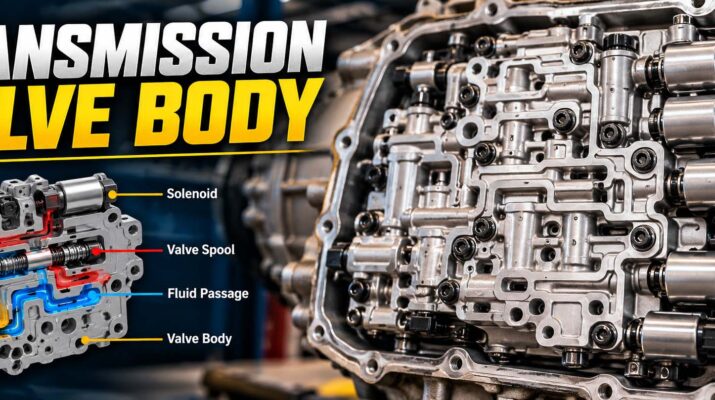
When an automatic transmission shifts smoothly from one gear to another, several mechanical, hydraulic, and electronic components work together behind the scenes. One of the most important is the transmission valve body, a complex control assembly that directs transmission fluid to the correct passages so the transmission can engage the appropriate clutch packs and gears.
A faulty valve body can cause hard shifts, delayed engagement, slipping, incorrect gear changes, or other transmission problems. However, similar symptoms can come from low fluid, electrical faults, worn internal components, or other causes. Therefore, understanding how the valve body works can make transmission problems easier to recognize and discuss with a qualified technician.
What Is a Transmission Valve Body?
A transmission valve body is a hydraulic control assembly found in automatic transmissions. It contains a network of fluid passages, valves, and related components that manage the flow and pressure of automatic transmission fluid.
You can think of it as a hydraulic traffic controller. Transmission fluid enters the valve body, while valves and passages route it toward different parts of the transmission according to operating conditions.
Modern automatic transmissions also use electronic controls. Therefore, the transmission control module, sensors, and shift solenoids often work with the valve body to determine when and how a gear change happens.
Before diagnosing a vehicle, knowing what kind of transmission it uses is helpful because conventional automatics, continuously variable transmissions, dual-clutch systems, and other designs do not all operate in the same way.
How Does the Valve Body Work?
An automatic transmission needs controlled hydraulic pressure to operate its internal clutch packs and other components.
First, transmission fluid circulates through the system under pressure. Next, the valve body routes that fluid through specific hydraulic passages. As operating conditions change, different valves or electronically controlled solenoids alter the fluid path.
As a result, hydraulic pressure can apply or release the components needed for a particular gear.
Older automatic transmissions relied more heavily on hydraulic and mechanical control. In contrast, modern designs commonly combine hydraulic operation with electronic commands from a transmission control module.
The module can consider information such as vehicle speed, throttle input, engine load, and other sensor data. Then, it can command solenoids to help control shifting.
Although people sometimes search for valve body transmission, the component is more accurately described as the valve body within an automatic transmission.
Main Parts Inside an Automatic Transmission Valve Body
The exact design varies between manufacturers and transmission models. Still, several components commonly appear in or around an automatic transmission valve body.
Hydraulic Passages
The valve body contains precisely designed channels that carry transmission fluid.
These passages direct hydraulic pressure to the appropriate circuits. Therefore, contamination, wear, or restricted flow can interfere with transmission operation.
Valves
Various valves move inside machined bores and control fluid pressure or direction.
Over time, wear in the valves or bores may allow pressure leakage. Consequently, the transmission may not respond exactly as its control system expects.
Shift Solenoids
Many modern transmissions use electrically controlled solenoids to regulate hydraulic functions.
If you have ever wondered what is a solenoid, it is essentially an electromechanical device that responds to an electrical command and controls a mechanical or hydraulic function. Inside a transmission system, different solenoids may influence gear selection, pressure, or related operations.
However, the number and purpose of these solenoids depend on the transmission design.
Separator Plates and Gaskets
A separator plate helps organize hydraulic circuits between sections of the valve body.
Meanwhile, gaskets or seals help keep fluid moving through the intended passages. Damage or leakage in these areas can disturb hydraulic pressure and create shifting problems.
Transmission Valve Body Symptoms to Watch For
Valve body problems do not always produce one unmistakable symptom. Instead, they can resemble several other transmission faults.
For that reason, diagnosis matters before replacing expensive parts.
Harsh or Rough Gear Changes
One possible symptom is an unusually hard shift.
For example, the vehicle may feel as though it suddenly bumps into the next gear instead of shifting smoothly. However, fluid problems, control issues, or internal transmission wear can produce similar behavior.
Delayed Engagement
You may select Drive or Reverse and notice a delay before the vehicle responds.
Likewise, there may be a hesitation during certain gear changes. Hydraulic pressure problems inside the valve body are one possible cause, although they are not the only explanation.
Incorrect or Unpredictable Shifting
A malfunctioning hydraulic or electronic control system may cause the transmission to shift at unexpected times.
In some cases, the vehicle may hold a gear longer than expected. In others, it may struggle to select the intended gear.
Transmission Slipping
Slipping can occur when the transmission fails to maintain the expected power transfer or gear engagement.
Because many faults can cause slipping, the symptom alone does not prove the valve body has failed.
Warning Lights or Diagnostic Codes
Modern vehicles monitor transmission operation electronically. Therefore, the vehicle may store diagnostic trouble codes when the control system detects abnormal operation.
Still, a code should normally serve as a diagnostic clue rather than automatic proof that one particular component requires replacement.
Can a Bad Valve Body Make a Car Jerk?
Yes, certain valve body faults can contribute to jerking or abrupt gear changes because incorrect hydraulic pressure can affect how smoothly a transmission applies its internal components.
However, jerking during acceleration has many possible causes outside the valve body.
If you are trying to determine why does my car jump when i accelerate, possible areas to investigate may include transmission behavior, engine performance, ignition or fuel problems, drivetrain components, and electronic controls.
Therefore, avoid buying a valve body based on the sensation alone. A proper diagnosis can prevent an expensive replacement that does not solve the original problem.
Transmission Valve Body vs Torque Converter
The valve body and torque converter both belong to many conventional automatic transmission systems, but they perform different jobs.
| Component | Primary Role |
|---|---|
| Valve body | Controls and routes hydraulic fluid |
| Shift solenoids | Electronically influence hydraulic operation |
| Torque converter | Transfers rotating power between engine and transmission |
| Transmission control module | Helps manage electronic transmission operation |
The torque converter sits between the engine and transmission in a conventional automatic setup. Meanwhile, the valve body manages hydraulic circuits inside the transmission.
Understanding how does a torque converter work can therefore help separate torque-converter symptoms from hydraulic control problems when learning how an automatic transmission operates.
Even so, diagnosing real transmission faults often requires checking the complete system rather than assuming one component caused every symptom.
What Causes Valve Body Problems?
Several conditions can contribute to valve body trouble.
Wear is one possibility. As valves repeatedly move through their bores, internal surfaces may gradually wear. Consequently, hydraulic pressure can escape where tighter control is required.
Contaminated or degraded transmission fluid can also affect hydraulic components. Debris may interfere with small passages or moving parts, while unsuitable fluid can affect transmission operation.
Electrical problems create another possibility. Since many modern valve bodies rely on solenoids and electronic commands, a wiring, connector, sensor, module, or solenoid fault can sometimes resemble a mechanical valve body problem.
Finally, internal transmission damage can produce debris or pressure issues that affect other parts of the system. Therefore, technicians often need to determine whether valve body trouble is the original failure or a result of another problem.
GM Transmission Valve Body Delays: What Does the Term Mean?
People searching for GM transmission valve body delays are often describing delayed engagement or delayed shifting in a General Motors vehicle.
However, GM has used many different transmissions across different models and years. Therefore, there is no single valve body diagnosis that applies to every GM vehicle.
A delay could potentially involve hydraulic pressure, fluid condition or level, a valve body component, a solenoid, software or control behavior, or internal transmission wear.
For that reason, identify the exact vehicle, engine, transmission, model year, symptoms, and diagnostic codes before deciding on a repair.
Manufacturer-specific service information can also matter because diagnostic procedures differ between transmission families.
How Is a Valve Body Problem Diagnosed?
A technician will usually gather evidence before recommending replacement.
The process may begin with checking the customer’s description of the symptoms. Next, a diagnostic scan can reveal stored transmission-related trouble codes and live operating data.
Depending on the vehicle, further checks may include:
- Inspecting transmission fluid level and condition using the correct manufacturer procedure.
- Looking for leaks or visible wiring problems.
- Reading transmission and engine diagnostic codes.
- Reviewing sensor and commanded-shift data.
- Testing electrical circuits or solenoids where appropriate.
- Checking hydraulic pressure when required.
- Comparing results with manufacturer service information.
Some vehicles also require software-related procedures, adaptations, or relearning after certain transmission repairs.
Therefore, diagnosis is usually more reliable than replacing components based only on symptoms found online. For example, an official NHTSA-hosted manufacturer service procedure directs technicians to check diagnostic trouble codes and follow the applicable repair-manual procedure when replacing a transmission valve body assembly.
Transmission Valve Body Replacement Cost
The transmission valve body replacement cost varies widely because the part, labor requirements, transmission design, and repair procedure differ by vehicle.
A valve body may be available as a complete assembly, while another transmission may allow certain individual components to be serviced. In some designs, electronics or solenoids are closely integrated with the assembly, which can affect the price.
Labor can also vary significantly. Access may be relatively straightforward on one vehicle yet require more disassembly on another.
Other costs can include transmission fluid, filters or seals, diagnostic work, programming, adaptation procedures, or related components.
Therefore, an accurate estimate requires the vehicle’s year, make, model, engine, and transmission identification. Parts pricing and labor rates also vary by location and repair facility, so a universal replacement figure can be misleading.
Can You Drive With a Bad Transmission Valve Body?
That depends on the fault and severity.
A vehicle with mild shifting symptoms may still move, while a more serious hydraulic or electronic problem could cause harsh shifts, slipping, delayed engagement, or failure to select gears correctly.
Continuing to drive with severe transmission symptoms may increase the risk of further damage. Therefore, noticeable slipping, violent shifting, loss of drive, overheating warnings, or major delays deserve prompt inspection.
If the vehicle behaves unpredictably or cannot be operated safely, avoid driving it and arrange professional assistance.
Can a Transmission Valve Body Be Repaired?
Sometimes.
Specialists may be able to service particular valves, solenoids, separator plates, or worn hydraulic areas depending on the transmission design and condition.
In other cases, replacing the complete assembly may make more sense.
The decision depends on parts availability, diagnostic findings, repairability, labor costs, and whether other transmission damage exists.
Therefore, the best repair is not automatically the cheapest individual part. It is the repair that addresses the verified cause of the problem.
How to Reduce the Risk of Transmission Problems
No maintenance routine can prevent every mechanical failure. Still, proper care can support normal transmission operation.
Follow the vehicle manufacturer’s service information for the correct transmission fluid specification and maintenance procedure. In particular, avoid assuming that all automatic transmission fluids are interchangeable.
Also, investigate fluid leaks instead of repeatedly topping up the system without finding the source.
If shifting behavior suddenly changes, have the vehicle inspected rather than waiting for the problem to become severe. Early diagnosis may identify an electrical, fluid, or control issue before more expensive work becomes necessary.
Finally, avoid attempting valve body adjustments or internal transmission work without the correct service information and tools. Hydraulic components can contain small, precisely located parts, so incorrect assembly can create new problems.
FAQs About the Transmission Valve Body
Is the Transmission Valve Body Part of Every Transmission?
No. The term is most commonly associated with hydraulic automatic transmissions. Other transmission types use different control arrangements, although some may contain valve-body-like hydraulic control units.
Can Dirty Transmission Fluid Damage a Valve Body?
Contamination and degraded fluid can interfere with transmission components and hydraulic operation. However, the exact effect depends on the transmission and condition, so fluid appearance alone does not confirm valve body damage.
Will a Bad Valve Body Always Trigger a Warning Light?
Not necessarily. Some faults may trigger diagnostic codes, while others may mainly produce mechanical or hydraulic symptoms.
Is a Solenoid the Same as a Valve Body?
No. A solenoid is a separate electromechanical component, although multiple transmission solenoids may be installed in or attached to the valve body.
Does Replacing the Valve Body Fix Transmission Slipping?
Only when the diagnosed cause of the slipping involves the valve body or related controls. Internal clutch wear, fluid problems, electrical faults, and other transmission damage can also cause slipping.
What to Do When Valve Body Symptoms Appear
A transmission valve body plays a central role in controlling hydraulic fluid inside many automatic transmissions. Because that fluid pressure helps determine how and when internal components engage, valve body problems can produce noticeable changes in shifting behavior.
Still, rough shifts, slipping, delayed engagement, and jerking do not automatically mean the valve body needs replacement. Several mechanical, hydraulic, and electronic faults can create similar symptoms.
Start with the basics, identify the exact transmission, scan the vehicle for relevant codes, and follow the manufacturer’s diagnostic procedures. Then, if testing points to the valve body, you can make a repair decision based on evidence rather than guesswork.