
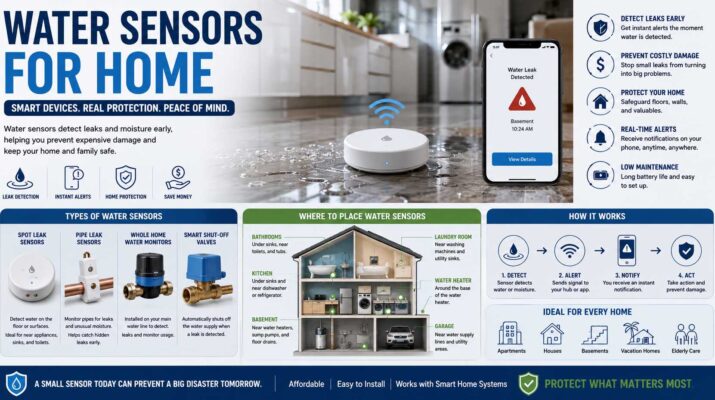
A small leak under a sink or behind a washing machine can go unnoticed until it damages flooring, cabinets, or walls. Water sensors for home provide an early warning by detecting unwanted moisture and alerting you before a minor problem becomes much bigger. Some models simply sound an alarm, while connected sensors can send notifications to your phone even when you are away.
These devices are relatively simple, yet choosing the right type and putting it in the right place makes a major difference. Therefore, understanding how water sensors work, which features matter, and where they provide the most protection can help you build a more effective home leak-detection system.
What Are Water Sensors for Home?
A home water sensor is a small electronic device designed to detect water where it should not normally be present. Usually, it sits on the floor near appliances, pipes, toilets, water heaters, or other potential leak sources.
Most basic sensors have conductive contacts on their underside. When water touches two contacts, it completes an electrical path. As a result, the device recognizes the presence of moisture and triggers an alarm.
Smart models go a step further. For example, they may communicate with a hub or directly with your home network. Consequently, you can receive a smartphone notification instead of relying only on an audible alarm.
Water sensors should not be confused with devices that measure water quality, pressure, or consumption. Although some whole-home systems monitor several conditions, a conventional leak sensor mainly answers one question: Is there water where there should not be?
How Do Water Leak Sensors for Home Work?
Although designs vary, the basic process is straightforward. First, the sensing contacts remain dry during normal operation. Then, escaping water reaches the sensor and bridges those contacts. Next, the electronics recognize the change and activate a warning.
Depending on the model, that warning may include:
- A built-in siren
- A smartphone push notification
- An email or app alert
- A smart-home automation
- A signal to a connected shutoff system
This process is a simple residential example of what is instrumentation used for: sensing a physical condition, turning it into usable information, and allowing a person or system to respond.
Some products also include separate sensing cables. Because a cable covers a larger area than two small contacts, it can detect leaks along a wall, behind appliances, or around equipment.
Local alarms vs smart alerts
A basic standalone detector works much like a smoke alarm. Once water reaches it, the unit produces a loud sound. Therefore, this type works well when someone is usually home.
Connected sensors are more useful when the property is frequently empty. For instance, WiFi water sensors for home can potentially notify you while you are at work or traveling, provided the sensor, network, and notification service are functioning correctly.
Why Water Sensors for Home Are Worth Considering
Instead, a loose washing-machine connection, leaking dishwasher, failing water heater, or slowly dripping supply line can release water gradually.
Because these problems often start in hidden or rarely inspected spaces, early detection has real value.
They can catch leaks sooner
A properly positioned sensor can detect water soon after it reaches the floor. Therefore, you may have time to shut off the supply, move belongings, or arrange a repair before the leak spreads.
They can monitor areas you rarely check
Few people inspect the space behind their refrigerator or beneath every sink each day. However, a sensor can remain there continuously.
Similarly, smart-home users often combine leak detection with security devices such as window alarm sensors to monitor different household risks without constantly checking each area manually.
Remote alerts add protection while you are away
A loud siren has limited value if nobody can hear it. In contrast, connected models can transmit information to another device or service.
This is closely related to what is telemetry , since the sensor can measure an event at one location and transmit that information elsewhere. In a smart home, that could mean sending a leak alert from your basement to the phone in your pocket.
Best Places to Install Water Sensors
Buying good sensors is only part of the job. Placement often determines how useful they will be.
Start with locations that combine a water source with a realistic chance of leakage.
Under kitchen and bathroom sinks
Sink cabinets contain supply connections, valves, drains, and sometimes water filters. Since small leaks can remain hidden inside the cabinet, placing a sensor near the plumbing connections provides useful early warning.
However, avoid putting it somewhere that routine splashes will constantly trigger false alarms.
Near the washing machine
Washing machines rely on water supply hoses and drainage connections. Therefore, place a detector on the floor where leaking water is likely to collect first.
If the machine sits upstairs, early detection becomes even more valuable because water can potentially affect the room below.
Beside the water heater
Water heaters can leak from connections, valves, corrosion, or the tank itself. Consequently, this area deserves priority when deciding where to place your first sensors.
Around toilets
A leaking toilet connection, tank, or seal can put water onto the bathroom floor. A compact sensor positioned beside or behind the toilet can provide an early warning without getting in the way.
Under a dishwasher
Dishwashers can develop supply, drain, or internal leaks. However, installation space varies. If a sensor cannot fit directly underneath, position it near the front edge or another point where leaking water is likely to emerge.
Near refrigerators and freezers with water lines
If your refrigerator includes an ice maker or water dispenser, it has a water supply connection. Therefore, a sensor behind or beside the appliance may catch a leaking line before significant water reaches the surrounding flooring.
Best Water Sensors for Home: Features That Actually Matter
The best water sensors for home are not necessarily the models with the longest feature lists. Instead, they should match your property, smart-home setup, and monitoring needs.
| Feature | Why It Matters | Best For |
|---|---|---|
| Audible alarm | Warns people nearby | Basic home protection |
| Phone alerts | Provides remote warnings | Travelers and workers |
| Battery status | Reduces risk of unnoticed battery failure | All users |
| Sensing cable | Monitors a wider area | Basements and utility spaces |
| Temperature monitoring | May warn about freezing conditions | Cold climates |
| Smart-home integration | Supports connected routines | Smart homes |
| Shutoff compatibility | Can support automatic water control | Higher-level protection |
Battery-life notifications deserve special attention. A sensor cannot protect an area effectively if its battery has been dead for months.
Likewise, check whether remote notifications depend on Wi-Fi, a separate hub, or a cloud service before buying several devices.
Best Water Leak Sensors for Home: Smart or Basic?
Choosing between smart and basic models depends largely on how you expect to receive alerts.
A basic detector can be inexpensive, simple, and easy to install. Since it does not need a network connection, setup is usually minimal. However, someone generally needs to be close enough to hear it.
A smart detector offers greater flexibility. For example, you might receive an alert while away from home. Some ecosystems also let sensors interact with other compatible devices.
Neither approach is automatically better. Instead, consider the risk level of each location.
For a frequently occupied bathroom, a simple audible detector may be enough. On the other hand, a smart sensor near a basement water heater may offer more value if you spend long periods away from home.
Can a Water Sensor Automatically Shut Off the Supply?
A standalone sensor normally detects a leak but cannot physically stop the water. However, some systems can communicate with an automatic shutoff valve.
When compatible equipment detects a serious leak, the system may command a valve to close. In engineering terms, this introduces an actuator into the system. If you are unfamiliar with that component, understanding what is an actuator helps explain how an electronic warning can become a physical action such as moving a valve.
Still, automatic shutoff systems require careful installation and configuration. Therefore, homeowners should verify compatibility and follow manufacturer guidance, especially when equipment connects directly to the main water supply.
How to Set Up Water Sensors Correctly
Fortunately, most standalone sensors require little installation.
First, identify your highest-risk areas. Water heaters, washing machines, sinks, toilets, dishwashers, and refrigerators with supply lines are good starting points.
Next, test the sensor according to its manufacturer’s instructions before placing it permanently. This step confirms that the alarm or notification system works.
Then, place the sensing contacts where leaking water is most likely to travel. Because water follows gravity and floor slope, a sensor positioned several feet uphill from a leak may not activate quickly.
For smart models, connect the sensor to its required app, hub, or network. Afterward, enable notifications and verify that alerts reach your phone.
Finally, label sensors inside the app when possible. Names such as “Upstairs Washing Machine” or “Basement Water Heater” are much more useful during an emergency than generic names such as “Sensor 3.”
Common Water Sensor Mistakes to Avoid
One common mistake is buying a sensor and never testing it. Instead, perform periodic checks according to the manufacturer’s instructions so you know the alarm, battery, and communication system still work.
Another problem is poor placement. For example, putting a sensor near a water heater does little good if a raised edge prevents leaking water from reaching it.
Also, avoid relying entirely on smart notifications. Wi-Fi outages, depleted batteries, disabled phone notifications, or service interruptions can interfere with remote alerts. Therefore, models with both local alarms and remote notifications can provide useful redundancy.
Finally, remember that leak detectors do not replace plumbing maintenance. They can warn you about water, but they cannot repair deteriorated hoses, faulty valves, corroded pipes, or damaged seals.
Building a More Complete Home Leak-Detection System
Rather than placing one detector somewhere in the house, think in terms of coverage.
Start by listing every major indoor water source. Then, rank each location by the potential severity of a leak and how quickly you would normally notice it.
For example, an upstairs washing machine may deserve higher priority than a utility sink on a waterproof basement floor.
Next, decide which locations need remote alerts. After that, consider whether high-risk areas justify a compatible automatic shutoff system.
Finally, test the entire setup periodically. This approach creates a simple monitoring network instead of a collection of forgotten gadgets.
FAQs About Water Sensors for Home
How many water sensors does a house need?
There is no universal number. Instead, count the main leak-prone locations in your home, including sinks, toilets, water heaters, washing machines, dishwashers, and refrigerators with water connections. Larger homes will usually need more coverage.
Do water sensors need Wi-Fi?
No. Basic models can sound a local alarm without internet access. However, Wi-Fi or another wireless connection is generally required if you want remote smartphone alerts.
Where should I put a water leak sensor?
Place it where escaping water is likely to reach first. Good locations include beneath sinks, beside water heaters, near washing machines, around toilets, and close to appliances connected to water lines.
Can water sensors detect slow leaks?
They can detect a slow leak once enough water reaches their sensing contacts. However, they may not detect moisture that remains inside a wall, pipe cavity, or cabinet without reaching the sensor.
Are smart water sensors difficult to install?
Most point sensors are beginner-friendly because they usually require app setup and placement rather than complicated wiring. However, automatic main-line shutoff systems can involve plumbing work and may require professional installation.
A Simple Way to Protect the Highest-Risk Areas
You do not need to automate every part of your house at once. Instead, begin with the places where an unnoticed leak could cause the most damage. A washing machine, water heater, dishwasher, and under-sink cabinet are practical starting points.
From there, add connected alerts if you regularly spend time away from home. Meanwhile, test batteries and notifications periodically, and keep ordinary plumbing maintenance on your checklist.
Used this way, water sensors for home become a simple layer of early warning. They cannot prevent every plumbing problem, yet they can give you something extremely useful when a leak starts: more time to respond.