
If you’re shopping for a new washing machine, you’ve probably come across the difference between agitator and impeller designs. While both systems are built to clean clothes effectively, they use very different methods to move laundry through water and detergent. Understanding how each one works can help you choose a washer that fits your household, budget, and laundry habits.
Modern top-load washers are commonly available with either an agitator or an impeller. Although they share the same goal, their cleaning action, capacity, and efficiency vary in several important ways.
Difference Between Agitator and Impeller: Quick Overview
Before comparing performance, it’s helpful to understand the basic design of each system.
What Is an Agitator?
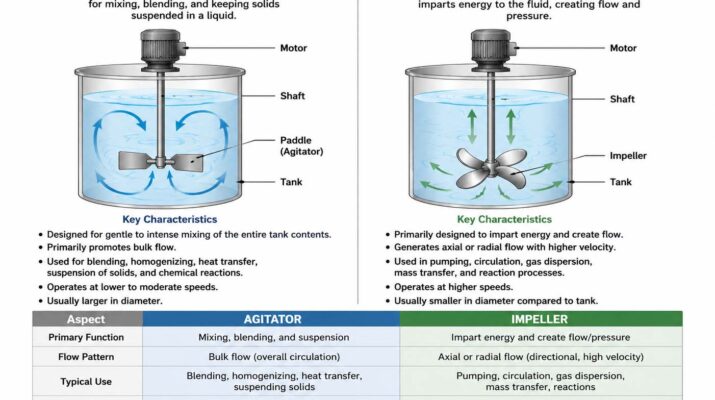
An agitator is the tall spindle located in the center of many traditional top-load washing machines.
During the wash cycle, the agitator twists back and forth, creating strong water movement that pushes clothes through detergent and water. This vigorous motion helps loosen dirt and stains from fabric.
Agitator washers have been used for decades and remain popular because they provide reliable cleaning performance, especially for heavily soiled loads.
What Is an Impeller?
An impeller is a low-profile disc or cone positioned at the bottom of the washer drum.
Instead of using a tall center post, the impeller creates carefully designed water currents that rotate clothing around the drum. The clothes rub gently against one another, helping remove dirt while reducing mechanical stress on fabrics.
Because there is no large center column, impeller washers typically provide more usable drum space.
Difference Between Agitator and Impeller Washer Designs
The difference between agitator and impeller washer models becomes easier to understand when comparing how they clean laundry.
| Feature | Agitator Washer | Impeller Washer |
|---|---|---|
| Center Post | Yes | No |
| Cleaning Action | Twisting agitation | Water circulation and fabric movement |
| Capacity | Usually lower | Usually higher |
| Gentle on Fabrics | Moderate | Better |
| Bulky Items | More limited | Easier to wash |
| Wash Cycle | Often shorter | Sometimes longer |
Although both systems can clean effectively, each has strengths depending on the type of laundry you wash most often.
How Each Washing System Works
The cleaning process differs much more than many shoppers realize.
How an Agitator Cleans Clothes
As the drum fills with water, the agitator rotates back and forth.
This movement:
- Forces clothing through water repeatedly
- Breaks up dirt and stains
- Improves detergent circulation
- Separates clothing during the wash cycle
The stronger mechanical action is one reason many families continue to prefer agitator washers for work clothes, towels, and heavily soiled garments.
Understanding rotating mechanical systems also makes it easier to appreciate other technologies that rely on motion and energy transfer. For example, anyone interested in machinery may also enjoy learning how does a turbo work, since both systems depend on carefully controlled movement to improve performance.
How an Impeller Cleans Clothes
Impeller washers rely on specially designed fins or raised surfaces.
Instead of aggressively moving clothes, they create water currents that encourage garments to circulate throughout the drum.
The process generally includes:
- Water movement
- Gentle fabric friction
- Even detergent distribution
- Controlled drum rotation
This design reduces wear on delicate clothing while allowing larger loads.
What Is the Difference Between Agitator and Impeller?
Many shoppers ask, what is the difference between agitator and impeller when comparing washing machines in a store.
The biggest difference is how clothes move during the wash cycle.
An agitator actively pushes and twists laundry using a center post.
An impeller allows clothing to move more freely while water currents perform much of the cleaning work.
That difference affects several factors:
- Cleaning style
- Fabric care
- Load capacity
- Water usage
- Energy efficiency
- Cycle length
Neither system is automatically better for every household.
Cleaning Performance Compared
Cleaning ability depends on more than the washing mechanism alone.
Modern detergents, drum design, water level sensors, and wash programs all contribute to performance.
In general:
Agitator Strengths
- Excellent stain removal
- Effective on muddy clothing
- Performs well with durable fabrics
- Often completes cycles faster
Impeller Strengths
- Better for delicate garments
- Handles bulky loads more easily
- Creates additional drum space
- Reduces fabric wear over time
Today’s high-efficiency impeller washers often compensate for gentler movement through optimized wash patterns and advanced sensors.
Capacity Makes a Bigger Difference Than Many Expect
Because impeller washers eliminate the center spindle, they provide noticeably more usable space.
That extra room makes washing larger items much easier.
Examples include:
- Comforters
- Blankets
- Sleeping bags
- Large towels
- Winter jackets
This added capacity is one of the main reasons many homeowners choose impeller models.
Mechanical design choices like these are common across many types of equipment. Similar engineering trade-offs can also be seen when comparing alternator vs generator, where different designs achieve similar goals using different operating principles.
Which System Is Better for Your Laundry?
The answer depends on your priorities.
Choose an agitator if you regularly wash:
- Sports uniforms
- Work clothes
- Children’s clothing
- Muddy garments
- Heavily stained fabrics
Choose an impeller if you frequently wash:
- Bedding
- Large family loads
- Delicate clothing
- Mixed fabrics
- Bulky household items
Understanding your typical laundry routine is often more valuable than simply choosing whichever model appears newer.
Difference Between Impeller and Agitator: Efficiency and Fabric Care
When comparing the difference between impeller and agitator, cleaning performance is only part of the picture. Water usage, energy efficiency, and clothing care also play a major role.
Most modern impeller washers are designed as high-efficiency (HE) machines. They typically use less water because the drum doesn’t need to fill as high as a traditional agitator washer.
Agitator models, on the other hand, often use more water to allow clothes to move freely around the center post. Some newer models include high-efficiency features, but the overall design still relies on stronger mechanical movement.
For households that do several loads every week, these differences may affect long-term utility costs.
Pros and Cons at a Glance
| Feature | Agitator | Impeller |
|---|---|---|
| Removes heavy stains | ✔ Excellent | ✔ Very Good |
| Gentle on fabrics | Moderate | Excellent |
| Washes bulky items | Good | Excellent |
| Drum capacity | Smaller | Larger |
| Water efficiency | Lower | Higher |
| Energy efficiency | Good | Often Better |
| Wash cycle length | Usually shorter | Sometimes longer |
This comparison shows that the better choice depends on what you wash most often rather than one system outperforming the other in every situation.
Which Washer Is Best for Different Households?
Every household has different laundry needs.
Best for Large Families
Families who wash multiple loads each week often appreciate the larger capacity of impeller washers.
The extra space makes it easier to clean comforters, blankets, and oversized loads without overfilling the drum.
Best for Heavy-Duty Laundry
If your laundry frequently includes muddy jeans, sports uniforms, workwear, or shop towels, an agitator washer may provide more aggressive cleaning action.
That stronger movement can help remove stubborn dirt without relying on specialty wash cycles.
Best for Delicate Clothing
Impeller washers generally treat fabrics more gently because clothing rubs against other garments rather than repeatedly wrapping around a center post.
This makes them a popular choice for:
- Athletic wear
- Knit fabrics
- Lightweight shirts
- Bedding
- Clothing with decorative stitching
Common Myths About Agitators and Impellers
Several misconceptions continue to confuse shoppers.
Myth: Impeller Washers Don’t Clean Well
Modern impeller washers are engineered to clean effectively using optimized wash motions, detergent distribution, and carefully controlled drum rotation.
While they clean differently than agitator models, many perform exceptionally well in independent testing.
Myth: Agitators Always Damage Clothing
Traditional agitators create more mechanical movement, but that doesn’t automatically mean they damage fabrics.
Using the correct wash cycle and avoiding overloaded drums helps reduce unnecessary wear.
Myth: Bigger Capacity Means Better Cleaning
A larger drum doesn’t automatically improve cleaning performance.
Overloading any washing machine—whether it uses an agitator or an impeller—can reduce water circulation and prevent detergent from reaching every garment.
Tips for Getting the Best Results
No matter which design you choose, following a few simple habits can improve washing performance.
- Sort clothing by fabric type.
- Avoid overloading the washer.
- Measure detergent carefully.
- Choose the correct wash cycle.
- Wash bulky items separately when possible.
- Leave enough room for clothes to move freely.
These small adjustments often make a bigger difference than many people expect.
Understanding Modern Washer Technology
Today’s washing machines rely on more than just the wash mechanism.
Many models include features such as:
- Automatic load sensing
- Variable-speed motors
- Multiple wash programs
- Smart connectivity
- High-efficiency water management
These technologies work together with either an agitator or an impeller to improve cleaning performance.
Many of these appliances also use electric motors that benefit from efficient power delivery. If you’re interested in how electrical systems differ in industrial and residential equipment, the comparison in single phase vs three phase provides useful background.
Mechanical Design Beyond the Washer
Although washing machines serve a very different purpose than automotive engines, they share a common engineering principle: every component is designed to perform a specific task efficiently.
For example, understanding the parts of a carburetor shows how individual components work together to manage airflow and fuel, much like a washer combines the drum, motor, transmission, and wash mechanism to produce effective cleaning.
Looking at technology this way makes it easier to appreciate why manufacturers continue refining both agitator and impeller systems instead of replacing one with the other.
Frequently Asked Questions
What’s the difference between agitator and impeller?
The main difference is how they move clothing during the wash cycle. An agitator uses a central post that twists clothing through water, while an impeller uses low-profile fins and water currents to circulate laundry more gently.
Which cleans clothes better?
Both can clean effectively when used correctly. Agitators often perform well on heavily soiled items, while impellers balance strong cleaning with gentler fabric care.
Which washer has more capacity?
Impeller washers usually offer more usable drum space because they don’t have a large center post.
Are impeller washers more energy efficient?
Many modern impeller models are designed as high-efficiency washers and often use less water and energy than traditional agitator models.
Is an agitator washer outdated?
Not at all. Many manufacturers continue producing agitator models because they remain a practical choice for households that regularly wash durable or heavily soiled clothing.
Making the Right Choice
Choosing between an agitator and an impeller comes down to your laundry habits rather than picking a universally better design.
If you value powerful cleaning for work clothes and heavily stained fabrics, an agitator washer may suit your needs. If you prefer larger capacity, gentler fabric care, and improved efficiency, an impeller washer is often the better fit.
By understanding the difference between agitator and impeller, you’ll be able to compare washing machines with confidence and choose a model that matches your household for years to come.