
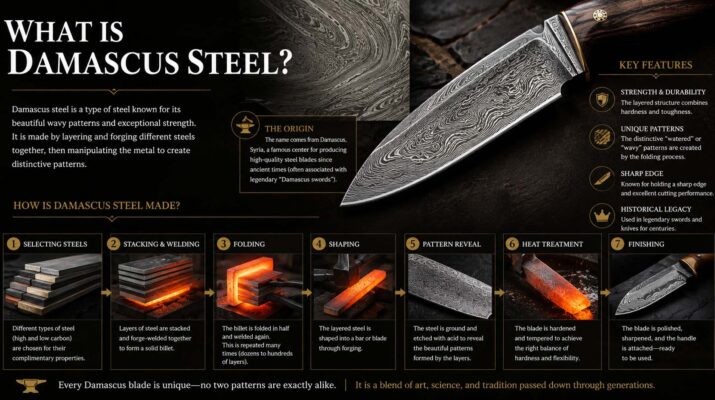
Damascus steel is a type of steel known for its distinctive patterns, strength, and durability. The term “what is Damascus steel” refers to understanding the unique material and its characteristics. Modern Damascus steel is typically made by forge-welding different types of steel together and repeatedly folding or manipulating them to create its recognizable wavy or layered patterns. It is commonly associated with knives, tools, and decorative metalwork. The quality of Damascus steel depends on the materials and craftsmanship used to produce it.
It is commonly used for:
Kitchen knives.
Hunting blades.
Pocket knives.
Luxury tools.
Collector items.
What Is Damascus Steel?
Damascus steel refers to a style of material created by layering multiple types of metal together and forging them into one blade.
The process creates:
Distinctive flowing patterns.
Improved toughness.
Strong edge retention.
Beautiful visual designs.
Historically, the original material became famous in the Middle East for its strength and sharpness.
Modern versions use advanced forging methods to recreate similar performance and appearance.
What Is It Made Of?
Modern versions are usually made by combining:
High-carbon steel.
Stainless steel.
Nickel-based alloys.
The layered construction creates the famous ripple patterns visible on the blade surface.
Different manufacturers use different steel combinations depending on the intended use of the knife and readers interested in comparing material performance may also find the guide on what is the strongest metal useful.
How Damascus Steel Is Made
Step 1: Layering the Metals
Multiple steel sheets are stack together.
Step 2: Heating
The metal stack is heat at extremely high temperatures.
Step 3: Forging
The heated metals are hammered and fused into one piece.
Step 4: Folding
The steel is folded repeatedly to create many layers.
Step 5: Acid Etching
An acid treatment reveals the famous Damascus pattern.
Modern technology allows manufacturers to produce highly consistent steel using precision equipment. These production systems often use sensors and controls, which connects naturally with the broader topic of what is instrumentation in industrial manufacturing.
What Is a Layered Steel Knife?
This type of knife is create using layered forging techniques.
It is known for:
Sharp cutting performance.
Attractive appearance.
Durability.
Unique craftsmanship.
These knives are commonly used for:
Cooking.
Outdoor survival.
Hunting.
Collecting.
Luxury gift products.
No two authentic patterns look exactly the same, making many blades visually unique.
Modern Knife-Making Technology
Modern knife production combines traditional craftsmanship with advanced manufacturing technology.
Today’s manufacturers use:
Computer-controlled heat treatment.
Precision forging equipment.
Laser cutting.
Advanced alloy engineering.
Automated tools and mechanical systems may also be involved in production, making what is mechatronics a relevant topic for readers interested in modern manufacturing technology.
What Makes This Material Special?
Several features make it unique.
Distinctive Appearance
The wave-like surface patterns make these blades instantly recognizable.
Strong Edge Retention
High-quality blades can maintain sharp edges for long periods.
Durability
Layered construction helps improve toughness and flexibility.
The way a material is formed can strongly affect its properties, as also seen when comparing wrought iron vs cast iron.
Craftsmanship Value
The combination of beauty and performance makes these knives highly desirable.
Damascus Steel vs Stainless Steel
| Feature | Layered Steel | Standard Stainless Steel |
|---|---|---|
| Appearance | Decorative layered patterns | Smooth plain surface |
| Sharpness | Excellent edge retention | Good depending on alloy |
| Craftsmanship | Premium handcrafted feel | Mass-produced options |
| Cost | Usually more expensive | Often cheaper |
| Maintenance | May require extra care | Easier corrosion resistance |
Both materials have advantages depending on user needs.
Common Uses
This material is used in many industries and hobbies.
Popular applications include:
Chef knives.
Pocket knives.
Swords.
Luxury tools.
Decorative collections.
EDC gear.
High-end culinary knives remain one of the biggest markets for these products in 2026.
How to Care for the Blade
Keep the Blade Dry
Moisture can damage certain high-carbon blades.
Clean After Use
Clean the knife gently after every use and dry it immediately.
Use Knife Oil
Light oil helps protect the surface from corrosion.
Avoid Dishwashers
Hand washing is strongly recommended.
Troubleshooting Common Problems
Rust Spots
Cause:
Poor moisture control.
Fix:
Dry the blade immediately and apply protective oil.
Dull Edges
Cause:
Heavy use without sharpening.
Fix:
Use proper sharpening stones carefully.
Surface Discoloration
Cause:
Exposure to acidic materials.
Fix:
Clean and polish the blade gently.
Fake Damascus Patterns
Cause:
Cheap laser-printed imitation designs.
Fix:
Buy from trusted manufacturers.
Real vs Fake Damascus Steel
Not every patterned blade is made from genuine Damascus steel.
Real products usually show:
Visible layered grain throughout the blade.
Natural irregular patterns.
Premium pricing.
Handcrafted details.
Fake products may only use surface printing or artificial etching.
Researching brands and reviews helps avoid low-quality products.
Why It Remains Popular in 2026
Social media, knife-collecting communities, and cooking content creators have increased interest in premium blades.
Modern buyers often want products that combine:
Technology.
Craftsmanship.
Durability.
Luxury design.
This material fits all these trends extremely well.
Is It Worth It?
For many users, the answer is yes.
It can offer:
Excellent craftsmanship.
Strong cutting performance.
Long-lasting edge quality.
Beautiful visual appeal.
The best choice depends on budget, usage, and personal preference.
Frequently Asked Questions
What is Damascus steel?
It is a layered or pattern-welded material known for its wave-like appearance, toughness, sharpness, and craftsmanship.
What is it made of?
Modern versions usually combine multiple types of high-carbon and stainless steel.
What is this type of knife?
It is a blade created using layered forging techniques to produce strength, cutting performance, and a distinctive pattern.
What makes it special?
Its beauty, strength, craftsmanship, and cutting performance make it highly valued.
Does it rust?
Some varieties can rust, especially when they contain high-carbon steel. Keeping the blade clean, dry, and lightly oiled helps reduce corrosion.
Conclusion
Understanding what Damascus steel is helps explain why it remains one of the most respected materials in modern blade technology. Its combination of layered craftsmanship, sharp cutting ability, and distinctive appearance continues attracting collectors, chefs, outdoor enthusiasts, and knife makers around the world.