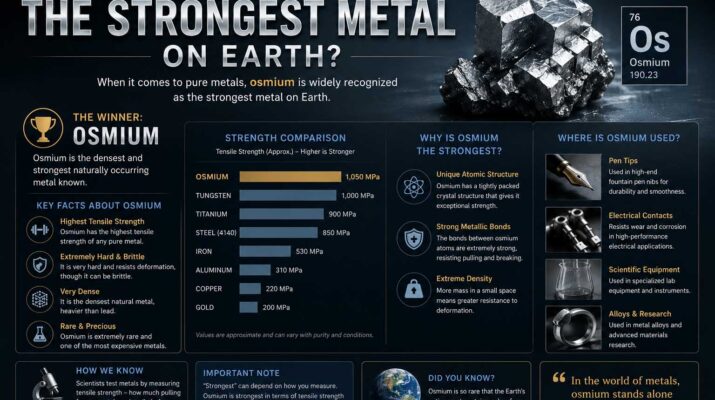
Metals are among the most important materials in modern technology. They are used in construction, transportation, aerospace engineering, electronics, military equipment, and countless industrial applications.
One question often asked by students, engineers, and technology enthusiasts is: what is the strongest metal on earth? The answer depends on how “strength” is measured because metals can be evaluated based on tensile strength, yield strength, hardness, impact resistance, and weight-to-strength ratio.
What Is the Strongest Metal on Earth?
When discussing pure metals, tungsten is often considered one of the strongest metals on Earth.
Tungsten is known for:
- Extremely high tensile strength
- Exceptional heat resistance
- Outstanding durability
- Very high melting point
Its melting point of approximately 3,422°C (6,192°F) is the highest of all pure metals.
Because of these properties, tungsten is widely used in aerospace, military equipment, industrial machinery, and advanced engineering applications.
However, strength can be measured in different ways, so other metals may outperform tungsten in specific categories.
Understanding Metal Strength
Before determining the strongest metal, it’s important to understand how strength is measured.
Tensile Strength
Tensile strength refers to the maximum force a material can withstand before breaking when stretched.
Yield Strength
Yield strength measures how much stress a material can endure before permanently deforming.
Hardness
Hardness describes resistance to scratches, dents, and wear.
Impact Resistance
Impact resistance indicates how well a material handles sudden force or shock.
Because different applications require different properties, there is no single metal that dominates every category.
What Is the Most Strongest Metal on Earth?
Many people search for what is the most strongest metal on earth when looking for the ultimate material.
In practical engineering, tungsten frequently appears near the top of the list because of its incredible strength and heat resistance.
However, titanium, chromium, and advanced steel alloys are also considered among the strongest materials available.
The best choice depends on the intended application.
For example:
- Aerospace industries often favor titanium.
- Heavy construction frequently relies on steel.
- High-temperature applications use tungsten.
Strongest Metals Comparison
The table below highlights several of the strongest metals commonly used today.
| Metal | Key Strength | Common Applications |
|---|---|---|
| Tungsten | Tensile strength & heat resistance | Aerospace, military |
| Titanium | Strength-to-weight ratio | Aircraft, medical implants |
| Chromium | Hardness | Industrial coatings |
| Steel | Durability and versatility | Construction, manufacturing |
| Nickel | Corrosion resistance | Turbines, aerospace |
Each metal offers unique advantages depending on the environment and performance requirements.
What Is the Strongest Metal Alloy on Earth?
Many engineers argue that alloys are more important than pure metals because they often deliver superior performance.
What Is the Strongest Metal Alloy on Earth?
One of the strongest metal alloys commonly recognized is high-strength steel alloy.
Advanced steel alloys combine:
- Iron
- Carbon
- Chromium
- Nickel
- Molybdenum
These combinations create materials capable of handling extreme stress and heavy loads.
Other powerful alloys include:
Titanium Alloys
Used in:
- Aircraft
- Spacecraft
- Medical devices
Inconel Alloys
Known for exceptional heat resistance.
Commonly used in:
- Jet engines
- Gas turbines
Maraging Steel
A high-performance alloy used in aerospace and defense industries.
In many practical situations, advanced alloys outperform pure metals.
What Is the Strongest and Lightest Metal on Earth?
Technology often requires materials that are both strong and lightweight.
What Is the Strongest and Lightest Metal on Earth?
Titanium is widely regarded as one of the strongest and lightest metals available.
Advantages include:
- High strength-to-weight ratio
- Corrosion resistance
- Durability
- Biocompatibility
Titanium is approximately 45% lighter than steel while maintaining impressive strength.
This makes it ideal for:
- Aircraft
- Space exploration
- Medical implants
- Sports equipment
Its balance of strength and low weight explains why it remains one of the most valuable engineering materials.
What Is the Strongest Metal on Earth? Real-World Applications
Strong metals are essential in modern technology.
Aerospace Industry
Aircraft require materials that are strong yet lightweight.
Titanium and advanced alloys are common choices.
Construction
Steel remains the backbone of modern buildings, bridges, and infrastructure.
Military Equipment
Tungsten and specialized alloys are used in armor, projectiles, and protective systems.
Medical Technology
Electronics
Strong metals help improve durability and performance in advanced electronic devices.
Why Engineers Use Alloys Instead of Pure Metals
Many beginners assume pure metals are always stronger.
In reality, alloys often perform better.
Benefits of alloys include:
Increased Strength
Combining metals can improve structural integrity.
Better Corrosion Resistance
Certain alloying elements help prevent rust and degradation.
Improved Heat Resistance
Some alloys perform exceptionally well in high-temperature environments.
Enhanced Durability
Alloys often last longer under demanding conditions.
This is why industries frequently prefer engineered alloys over pure metals.
How to Choose the Right Strong Metal
Selecting the right metal depends on several factors.
Step 1: Define the Application
Step 2: Consider Weight Requirements
Some industries prioritize lightweight materials.
Step 3: Evaluate Environmental Conditions
Step 4: Compare Costs
Certain metals are significantly more expensive than others.
Step 5: Review Strength Requirements
Different projects require different types of strength.
These considerations help engineers choose the most appropriate material.
Common Misconceptions About Strong Metals
Strongest Does Not Mean Hardest
Hardness and strength are different properties.
Heavy Metals Are Not Always Better
Titanium proves that lightweight materials can still be incredibly strong.
Pure Metals Are Not Always Superior
Advanced alloys often outperform pure metals.
One Metal Cannot Do Everything
Different applications require different performance characteristics.
Understanding these facts helps explain why engineers use a variety of materials.
Future of High-Strength Metals
Research continues to improve material performance.
Emerging developments include:
- Nanostructured metals
- Advanced titanium alloys
- Graphene-enhanced composites
- Lightweight aerospace materials
Future innovations may produce materials that surpass today’s strongest metals in both strength and efficiency.
FAQ
What is the strongest metal on earth?
Tungsten is often considered the strongest pure metal because of its exceptional tensile strength and heat resistance.
What is the strongest metal alloy on earth?
High-strength steel alloys and advanced aerospace alloys are among the strongest metal alloys used today.
What is the strongest and lightest metal on earth?
Is tungsten stronger than steel?
In many categories, tungsten exceeds steel in strength and heat resistance, but steel remains more versatile for construction.
Why are alloys stronger than pure metals?
Alloys combine multiple elements to improve strength, durability, corrosion resistance, and performance.
Conclusion
Understanding what is the strongest metal on earth requires looking beyond a single definition of strength. Tungsten is often recognized as the strongest pure metal due to its remarkable tensile strength and heat resistance, while titanium stands out as one of the strongest lightweight metals available.