
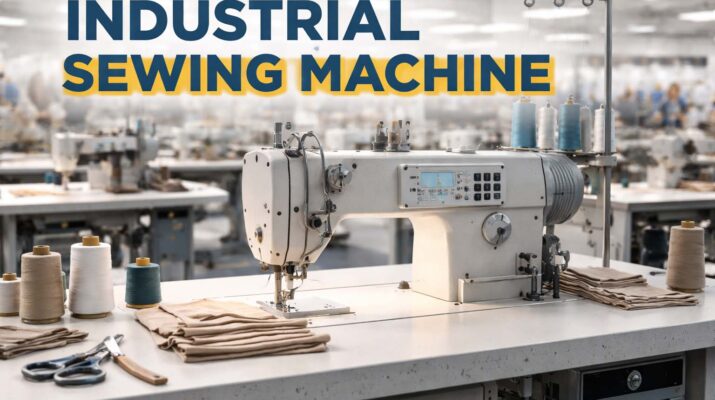
An industrial sewing machine is one of the most important tools in garment factories, upholstery shops, leather workshops, and textile plants. Unlike household machines, industrial models are designed for speed, durability, and long hours of continuous use. As a result, they help businesses produce clothing, bags, shoes, curtains, and many other stitched products efficiently.
Modern industrial units also come with powerful motors, precise stitching systems, and special functions for different materials.
In this guide, we will explore what this machine is, how it works, the different types available, and why it remains essential in today’s manufacturing world.
What Is an Industrial Sewing Machine?
An industrial sewing machine is a heavy-duty machine built for commercial production. In general, it is stronger and faster than a domestic sewing machine. In fact, these machines can run for many hours a day and handle thick fabrics, leather, denim, canvas, and bulk sewing tasks.
Most industrial machines sit in sturdy tables with separate motors. For this reason, businesses prefer them for faster production, more consistent stitches, a longer lifespan, stronger motors, and professional results.
History of the Industrial Sewing Machine
The sewing machine changed manufacturing forever. Before machines arrived, workers stitched garments by hand, which took a lot of time and labor. Then, machine sewing raised productivity and lowered production costs.
Many historians link this change to the industrial revolution and the rapid growth of textile factories in the nineteenth century. For example, Britannica notes that Isaac Singer patented his improved sewing machine in 1851, with an overhanging arm that let users sew on any part of the work. As factories adopted powered machines, clothing became cheaper and more widely available.
In turn, this innovation helped shape modern mass production, creating jobs and transforming the global fashion industry.
Popular Brands in the Market
Many trusted brands produce commercial sewing equipment. Usually, buyers choose based on reliability, maintenance support, and specialization.
Juki Industrial Sewing Machine
The juki industrial sewing machine line has a strong reputation worldwide. Juki machines are known for precise stitching, durability, and smooth operation. Therefore, many garment factories rely on Juki for large-scale production.
Singer Industrial Sewing Machine
Another famous name is the singer industrial sewing machine range. Singer has a long history in sewing technology, and people still trust its machines in commercial settings. In particular, Singer models are popular in tailoring shops, repair businesses, and light industrial work.
Types of Industrial Sewing Machines
Different industries need different stitch functions. So, choosing the right type matters.
Single needle lockstitch: This is the most common type. Typically, factories use it for straight seams in shirts, trousers, dresses, and many everyday garments.
Overlock machine: It finishes fabric edges and stops fraying. For this reason, it is essential in knitwear and garment production.
Walking foot machine: This machine moves the top and bottom layers of fabric together. As a result, it works well for thick or slippery materials such as leather, canvas, and upholstery.
Zigzag machine: Meanwhile, this type handles decorative stitching, stretch fabrics, and special seams.
Buttonhole and button attach machines: Finally, these machines automate finishing work in apparel factories. In short, each type serves a specific production need.
Benefits of an Industrial Sewing Machine
First, industrial models can sew thousands of stitches per minute, so orders get finished faster. Second, they handle thick and heavy materials better than domestic machines.
In addition, they produce even stitches, which matter for professional products and happy customers. Because manufacturers build them with metal parts, they also last a long time. Overall, speed and consistency lead to higher profits for businesses.
How to Choose an Industrial Sewing Machine
Buying one takes planning. First, think about your material, whether it is light fabric, denim, leather, or upholstery. Next, decide which stitch you need: straight, overlock, zigzag, or decorative.
Then, look at your daily workload. For heavy production, invest in a durable high-speed model. After that, set your budget, since prices range from affordable starter units to advanced automated systems. Finally, pick a brand with easy-to-find spare parts and technician support.
Maintenance Tips
Proper care keeps your machine running smoothly. To begin with, remove lint, thread waste, and dust after each day of use. Also, oil the machine regularly, because most models need lubrication for smooth movement.
In addition, replace bent or dull needles, since they can damage fabric and lower stitch quality. Likewise, check the belt and motor for wear, and book professional service regularly to avoid costly breakdowns. With proper care, a well-kept machine can last many years.
Best Industries That Use These Machines
Many businesses depend on industrial sewing technology. For example, garment factories use these machines to mass-produce shirts, pants, uniforms, and dresses. Similarly, upholstery shops make furniture covers, cushions, and car interiors with them.
Likewise, leather workshops sew bags, wallets, belts, and shoes. Meanwhile, home textile makers produce curtains, bedding, and table covers. Finally, tailoring shops and alteration businesses rely on them for repair work.
Why Juki and Singer Remain Popular
Both Juki and Singer have built strong reputations over time. Because of this, buyers often compare the two brands, depending on their workload and budget.
Generally, people praise Juki for modern factory efficiency, while they value Singer for its heritage, familiarity, and dependable operation.
Future of Sewing Technology
Modern machines now include advanced technology. For instance, servo motors save energy, automatic thread trimming saves time, and digital controls set each stitch. In addition, newer models run more quietly and support smart production monitoring.
As a result, these upgrades help factories raise output and lower operating costs.
Conclusion
An industrial sewing machine is an essential investment for businesses that need speed, durability, and professional stitch quality. From garment factories to upholstery workshops, these machines make production faster and more reliable.
Whether you choose a juki industrial sewing machine, explore the history of the sewing machine industrial revolution, compare a singer industrial sewing machine, or consider a modern juki sewing machine industrial model, the right equipment can transform your workflow.
In the end, if you want stronger performance and better productivity, a heavy-duty model remains one of the smartest tools for serious sewing work.