Keeping your teeth clean is one of the most important parts of daily health care. Many people now prefer electric toothbrushes because they are easy to use, effective, and designed to remove more plaque than manual brushes. Learning the best electric toothbrushing technique can help protect your teeth, prevent gum disease, and improve overall oral hygiene. A proper routine also keeps your breath fresh and helps maintain a brighter smile over time.
Why Electric Toothbrushes Are Popular
Electric toothbrushes have become increasingly popular because they provide consistent brushing movements that are difficult to achieve manually. Most models use oscillating, rotating, or sonic vibrations to clean the teeth and gums. Dentists often recommend electric toothbrushes because they can improve plaque removal and encourage better brushing habits.
People who struggle with manual brushing techniques often find electric toothbrushes easier to use. Children, older adults, and individuals with limited hand movement can especially benefit from them. However, even with advanced technology, brushing incorrectly can reduce effectiveness. Understanding the best electric toothbrushing technique is essential for getting the best results.
Choosing the Right Electric Toothbrush
Before discussing brushing methods, it is important to select a suitable electric toothbrush. Look for a toothbrush with soft bristles because hard bristles may damage the enamel and irritate the gums. A timer feature is also useful because dentists recommend brushing for at least two minutes.
Some electric toothbrushes include pressure sensors that warn users when brushing too hard. This feature helps protect gum tissue and prevents unnecessary enamel wear. Rechargeable models are generally more powerful and durable compared to battery-operated versions.
Preparing for Proper Brushing
Good preparation can improve your brushing routine. Start by rinsing the toothbrush head and applying a pea-sized amount of fluoride toothpaste. Spending equal time on each section ensures thorough cleaning.
The toothbrush should be held at a slight angle toward the gumline. This allows the bristles to clean both the teeth and the area where plaque often builds up near the gums.
The Best Electric Toothbrushing Technique
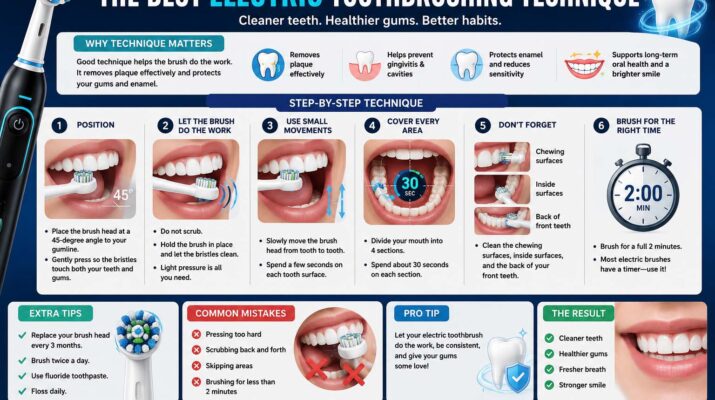
The best electric toothbrushing technique involves guiding the brush slowly across the teeth instead of scrubbing aggressively. Unlike manual toothbrushes, electric brushes do most of the work on their own. Place the brush head gently against each tooth and allow the vibrations or rotations to clean the surface.
Move the brush slowly from one tooth to the next. Hold the brush on each tooth for a few seconds before moving forward. Clean the outer surfaces, inner surfaces, and chewing surfaces carefully. Many people focus only on the front teeth, but every tooth needs equal attention.
Brushing too hard is a common mistake. Excessive pressure can damage the gums and wear down enamel over time. A gentle touch is more effective and safer for long-term oral health.
Cleaning Along the Gumline
The gumline is one of the most important areas to clean because plaque and bacteria often accumulate there. Hold the electric toothbrush at a 45-degree angle and gently guide it along the gums. The vibrations help loosen plaque without the need for aggressive scrubbing.
Ignoring the gumline may lead to gingivitis, gum inflammation, and bleeding gums. Consistent cleaning in this area can improve gum health and reduce the risk of periodontal disease.
Brushing Duration Matters
Many people brush for less than one minute, which is not enough for complete cleaning. electric toothbrushes include built-in timers that pause every 30 seconds to remind users to move to another section of the mouth.
Following the timer helps ensure balanced brushing across all areas. Spending too much time in one section and ignoring others can leave plaque behind.
The Importance of Tongue Cleaning
The tongue contains bacteria that contribute to bad breath and oral hygiene problems. After brushing the teeth, gently clean the tongue using the toothbrush or a tongue scraper. Some electric toothbrush heads are specifically designed for tongue cleaning.
This additional step can help improve breath freshness and reduce bacteria inside the mouth.
Replacing the Brush Head Regularly
Using a worn toothbrush head reduces cleaning effectiveness. Dentists recommend replacing electric toothbrush heads every three months or sooner if the bristles become frayed. Damaged bristles cannot clean properly and may irritate the gums.
Many modern toothbrushes include indicator bristles that fade in color when replacement is needed. Regular replacement supports better oral hygiene and ensures optimal performance.
Common Mistakes to Avoid
Several mistakes can reduce the benefits of an electric toothbrush. One common mistake is moving the brush too quickly. Rushing prevents the bristles from properly cleaning each tooth surface.
Another mistake is applying excessive force. Strong pressure does not clean better and may actually harm the gums and enamel. Skipping nighttime brushing is also harmful because bacteria and food particles remain in the mouth overnight.
Combining Brushing With Other Oral Care Habits
Even the best electric toothbrushing technique works best when combined with other oral hygiene practices. Flossing once daily removes food particles and plaque between the teeth where toothbrush bristles cannot reach.
Regular dental checkups are equally important. Dentists can identify cavities, gum disease, and other problems before they become serious. Professional cleanings also remove hardened plaque that cannot be eliminated through brushing alone.
Benefits of Proper Electric Toothbrushing
Using the correct brushing technique offers many long-term benefits. Proper brushing reduces plaque buildup, prevents cavities, and lowers the risk of gum disease. It can also help maintain whiter teeth by removing surface stains caused by food and drinks.
Conclusion
Learning the best electric toothbrushing technique can make a significant difference in oral health. Electric toothbrushes are highly effective when used correctly, but technique remains essential. Gentle movements, proper timing, and attention to all tooth surfaces are the keys to successful brushing.